Tech / SaaS / Web3
With the product logic, UX flow and system behavior defined in the previous phase, the focus shifted to translating those decisions into a clear, institutional and trustworthy visual language for Transparent.space—branding, visual identity, and UI design built on trust, precision, and institutional confidence.
Transparent.space is a real-time SLA transparency platform designed for market makers and liquidity providers operating in high-frequency digital asset environments. The project focused on translating complex performance infrastructure into a trustworthy, clear and technically sophisticated brand and interface language.
Most financial infrastructure platforms communicate reliability through dense dashboards and technical jargon, making it difficult for stakeholders to quickly assess operational performance. Transparent.space needed a brand and interface system capable of expressing precision, trust and technical maturity while remaining visually accessible.
Create a cohesive brand and UI system that:
• Communicates transparency and operational reliability
• Positions the platform within institutional-grade financial tooling
• Simplifies the perception of complex infrastructure metrics
• Establishes a scalable visual foundation for product evolution
The solution combined a data-driven visual identity with an interface system inspired by institutional trading environments.
Brand decisions emphasized:
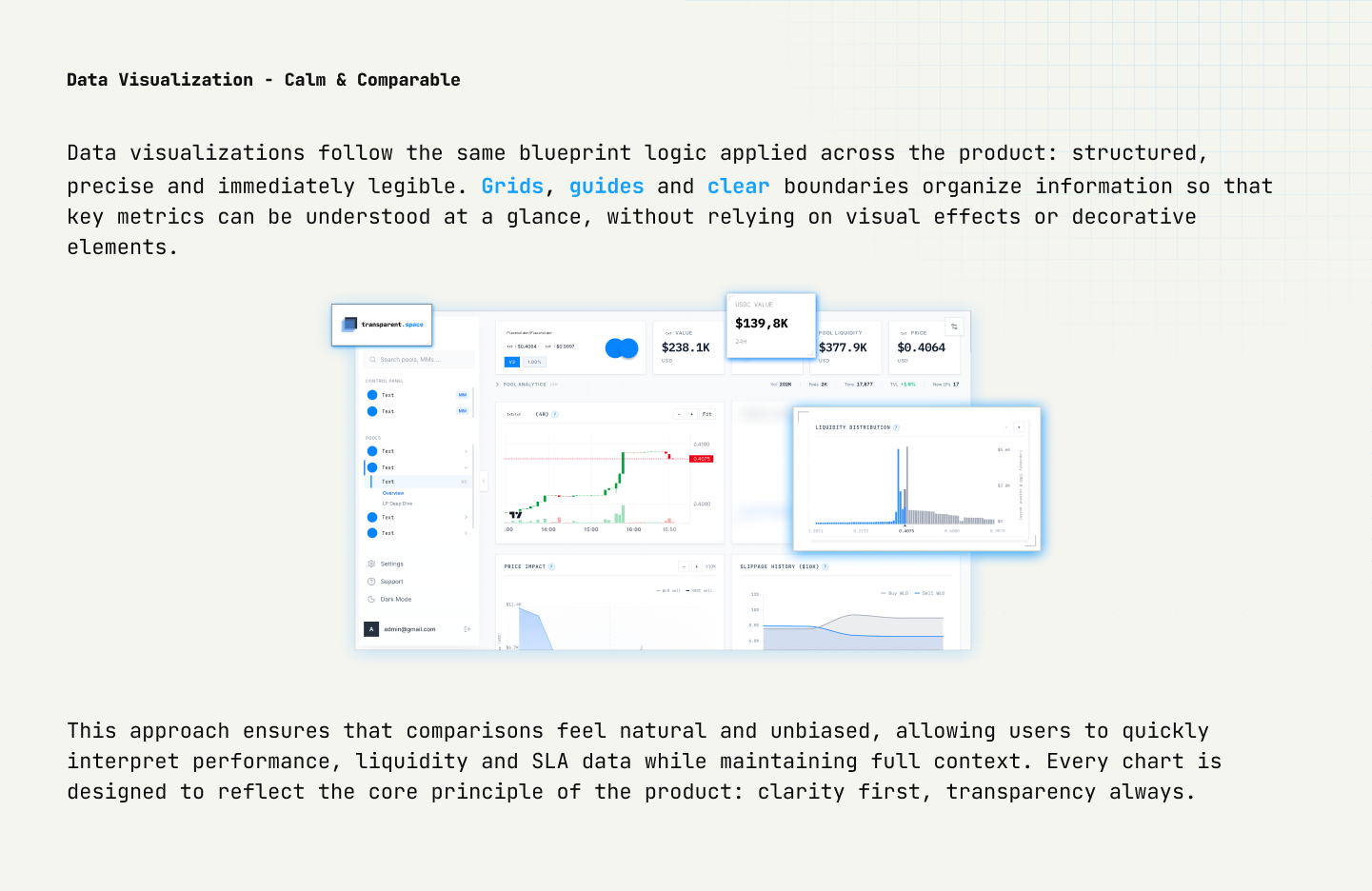
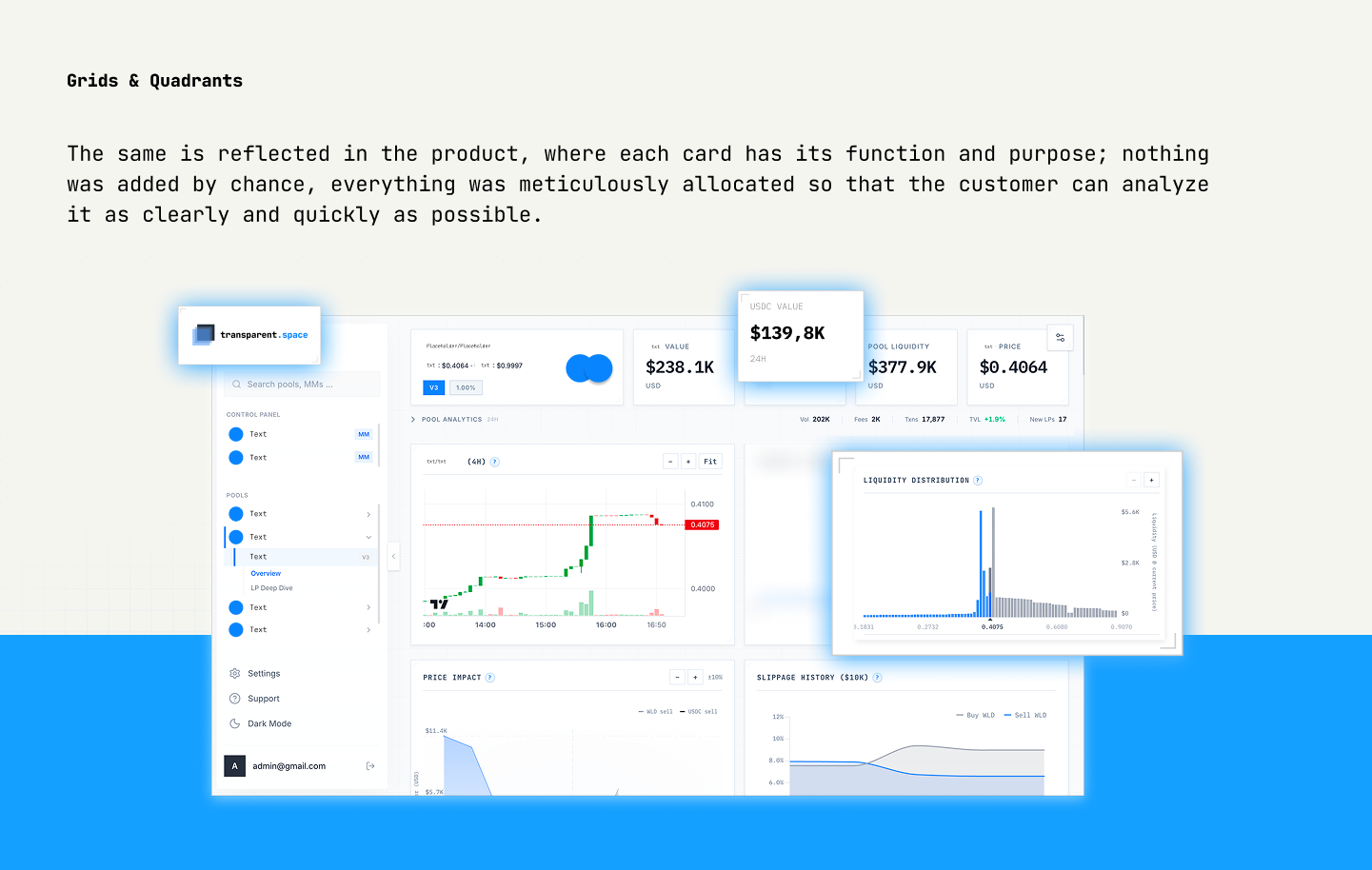
The interface system translated these principles into modular UI components, enabling dashboards to present performance metrics in a structured, legible and hierarchy-driven manner.
Together, branding and UI established Transparent.space as a platform that looks as reliable as the infrastructure it monitors.
Research focused on three pillars:
Competitive analysis revealed a gap between overly technical systems and overly simplified fintech visuals, informing a middle ground that balances sophistication and clarity.
Design principles centered on:
Components were designed as reusable modules, ensuring scalability as new features and dashboards are introduced.