Transparent.space · Market maker monitoring
A penalty decision was taking twenty minutes of cross-checking.
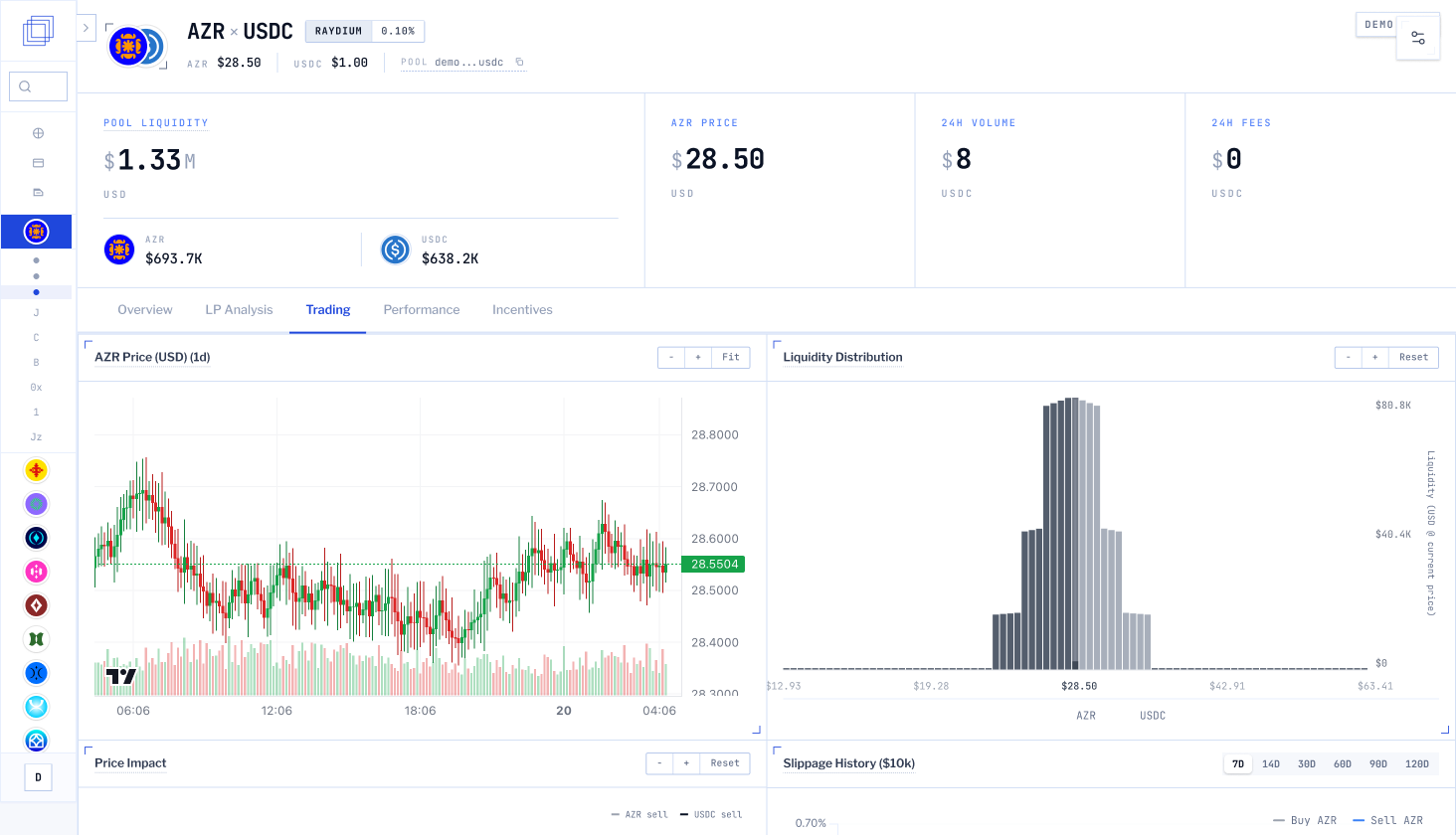
I designed the monitoring product so an operator could see whether a market maker was in compliance, on one screen.
Overview
Institutions hire market makers. Then they have to prove the work.
Web3 institutions depend on market makers for liquidity. Evaluating whether that maker actually performed is surprisingly hard.
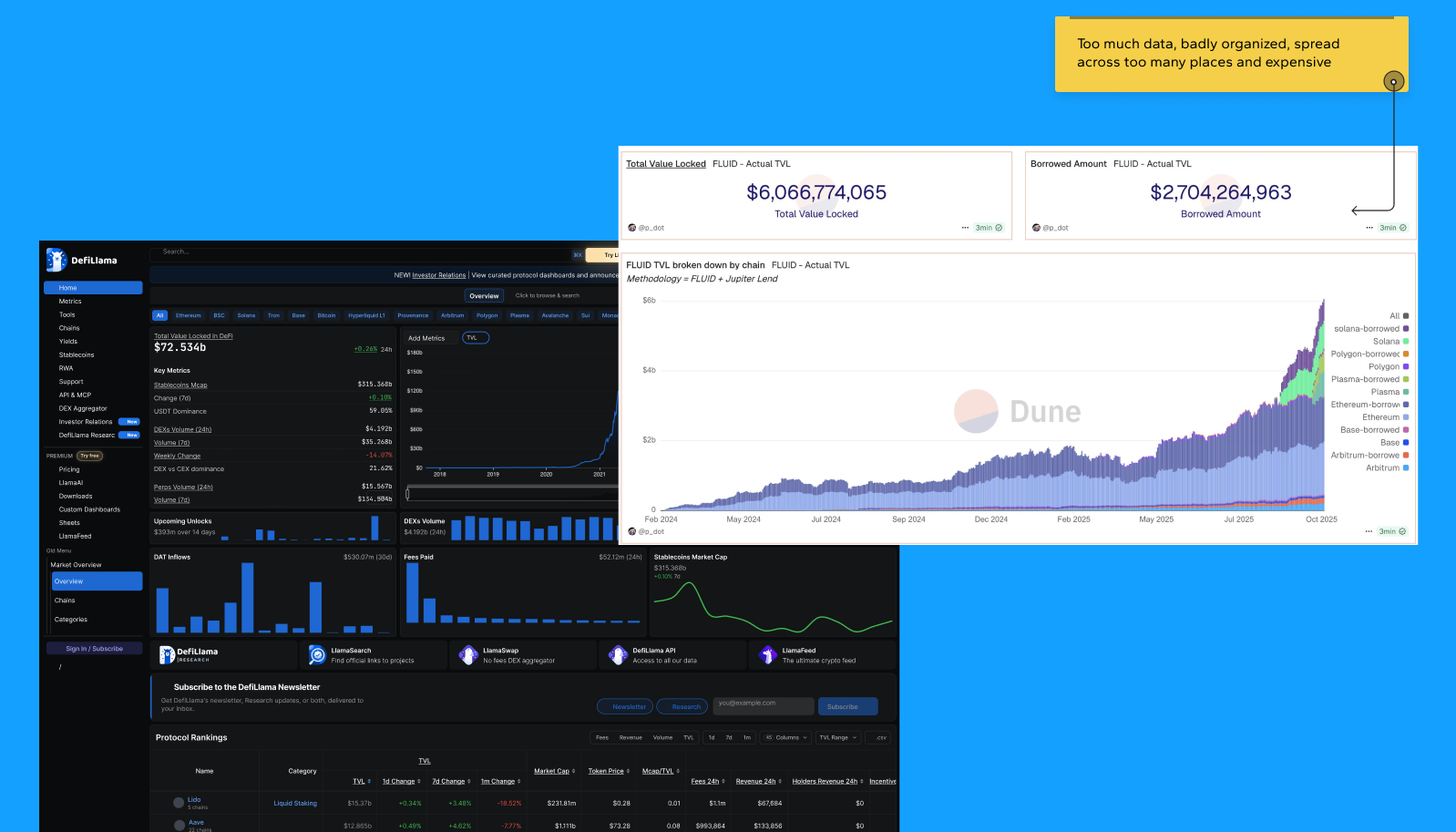
Tools such as Dune and DeFiLlama are expensive, split across products, and sometimes cannot index the exact field a contract cares about. When the decision is a contractual penalty, partial data is not good enough.
Problem
The number on screen was not the question being asked.
Two groups share the data and want opposite things. Funds, protocols, and exchanges need to decide quickly without a technical background. Market-maker teams need to prove they met the SLA.
In the middle is a costly call: if a maker steps outside the contract, someone has to decide whether a penalty applies. Getting it wrong costs money on both sides.
Opportunity
Unify the check, at a fair price, against the actual contract.
The product manager had years as a data analyst, so the pain was firsthand. The CEO had already been living with the problem. I used that context, then benchmarked how Dune, DeFiLlama, Bloomberg Terminal, Grafana, and Datadog handle dense financial data.
The gap was consistent: expensive tools, fragmented data, and contracts that could not be indexed as written. The product had to put a personalized contract on one platform.
Solution
Answer one question first: in compliance, or not.
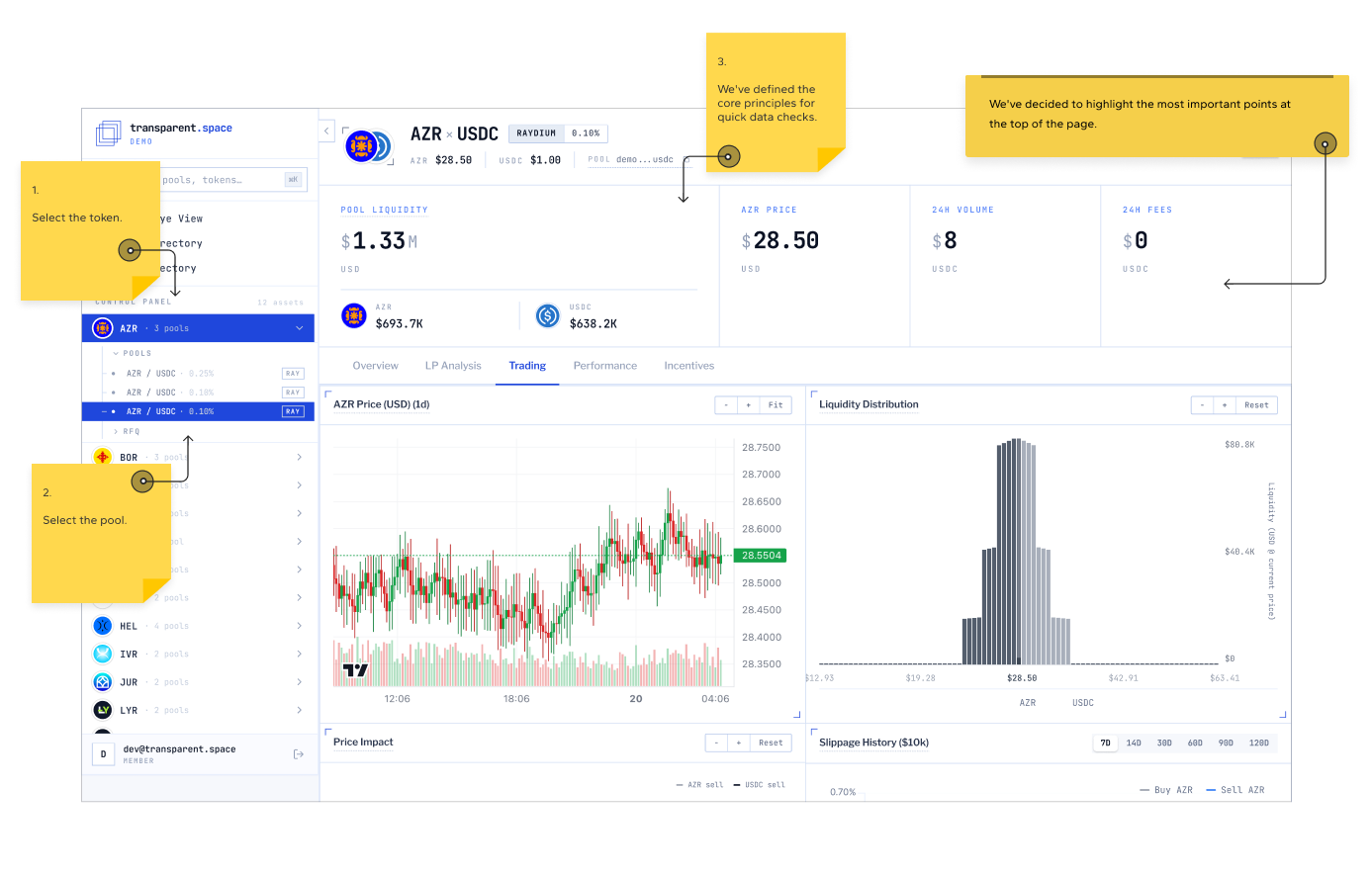
Every decision in the interface was aimed at the same outcome: cut the time to verify a data point and decide whether a penalty applies.
Core experience
The screen is built around the penalty, not the chart.
SLA as met or not met.
“98.7%” does not answer the question that matters. The interface treats the SLA as a binary contract.
Liquidity as behavior over time.
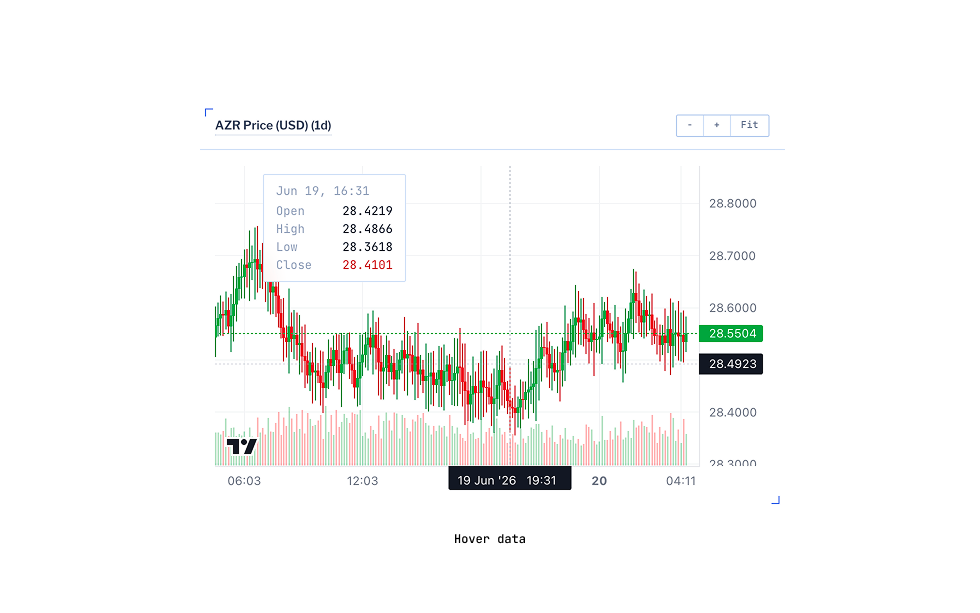
A $200K pool that dropped 60% in a week is a different story from a stable one. Showing only the current value hides the decision.
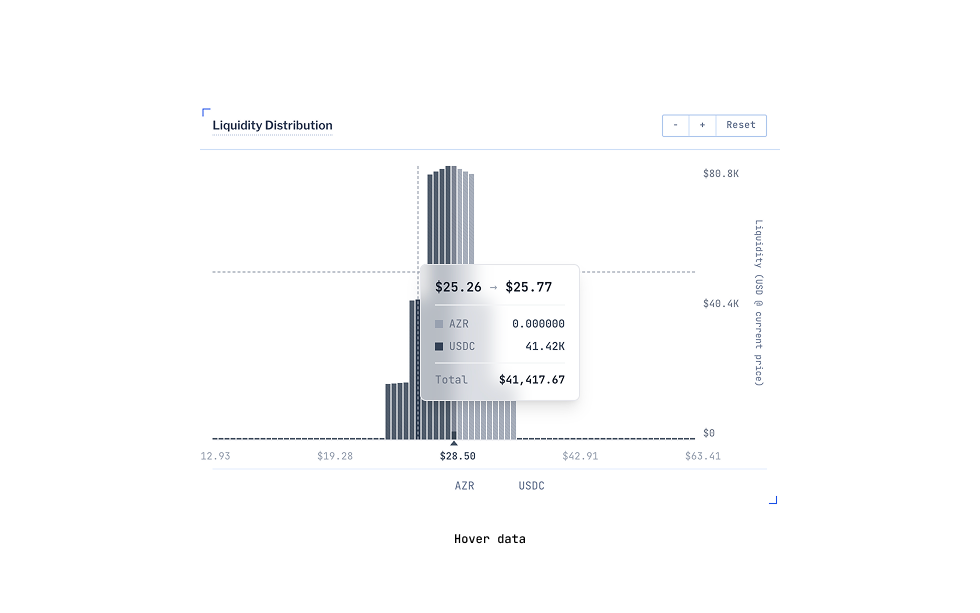
Context that stays within reach.
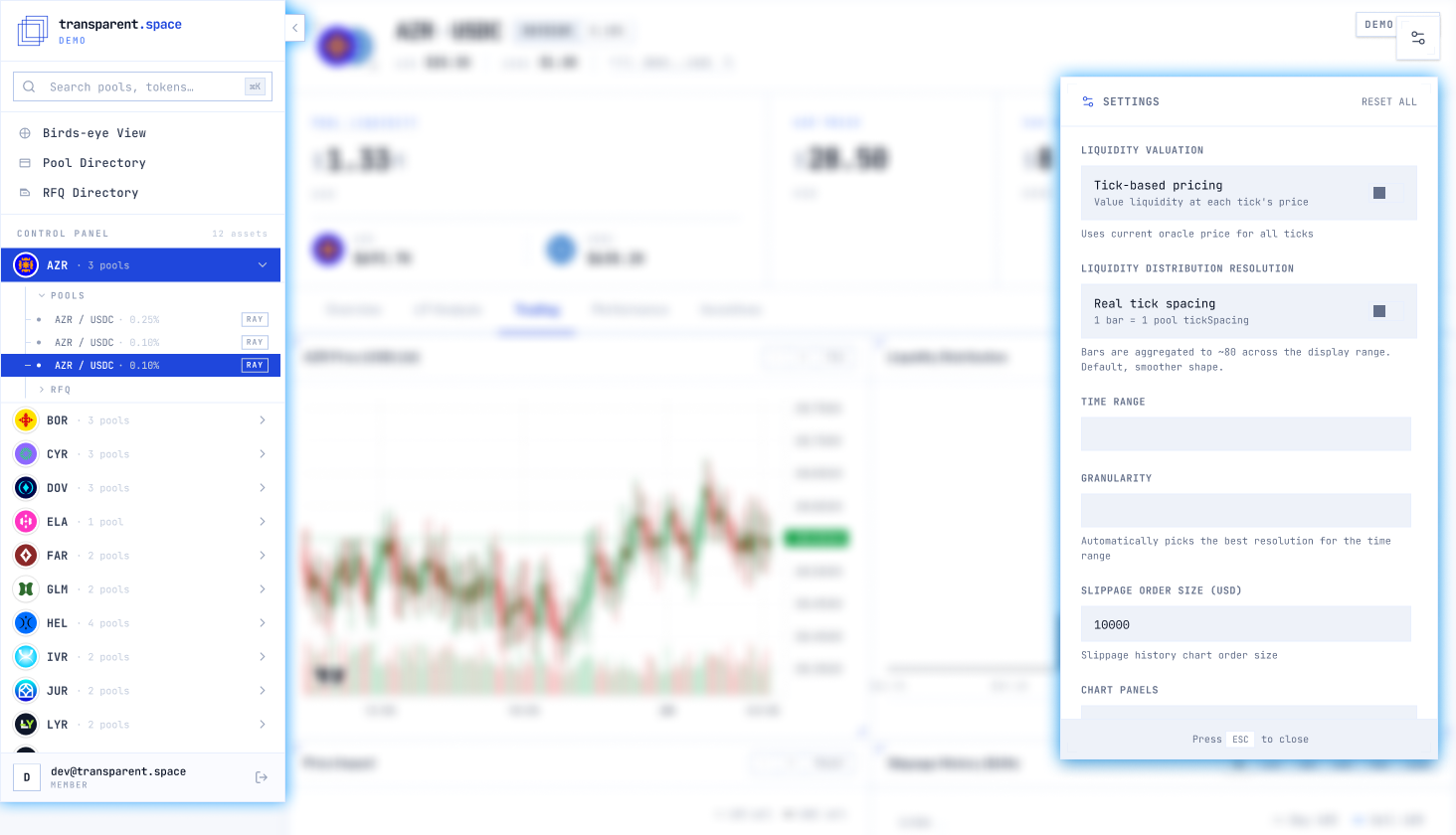
Operators watch several pools under personalized contracts. The sidebar holds contract metadata and reference info. Filters narrow by pool, timeframe, and SLA state so a session starts scoped.
Decisions
Simplifying the screen without simplifying the model just moves the confusion.
Binary over a precise percentage.
Precision felt rigorous and still failed the job. The operator needed a verdict they could defend.
Trend before the current value.
A static number looks complete in a stakeholder review. It hides the week that actually justifies a penalty.
Depth on demand.
Every metric removed from the main view had to earn its way back through drill-down. AI-assisted workflows made that iteration possible inside a six-month build. The full product was built with Cursor.
Design cycles sped up by about 60% in that timeline. That is a delivery effect, not a user metric.
Results
Faster checks, with the caveat on how they were measured.
Worldchain and Kraken acquired the product and run it in production, with personalized contracts across multiple pools.
Reflection
The product answers “in compliance right now.” It does not yet answer “tomorrow.”
The next layer is a predictive alert before a threshold breaks, and a neutral comparison of up to three market makers on one view, without the leaderboard bias we removed on purpose.
In institutional products, restraint is the strategy. A cleaner UI on top of the same pile of metrics only relocates the confusion.