Unimed Seguros · Telemedicine
Remote care only works if people believe it will work.
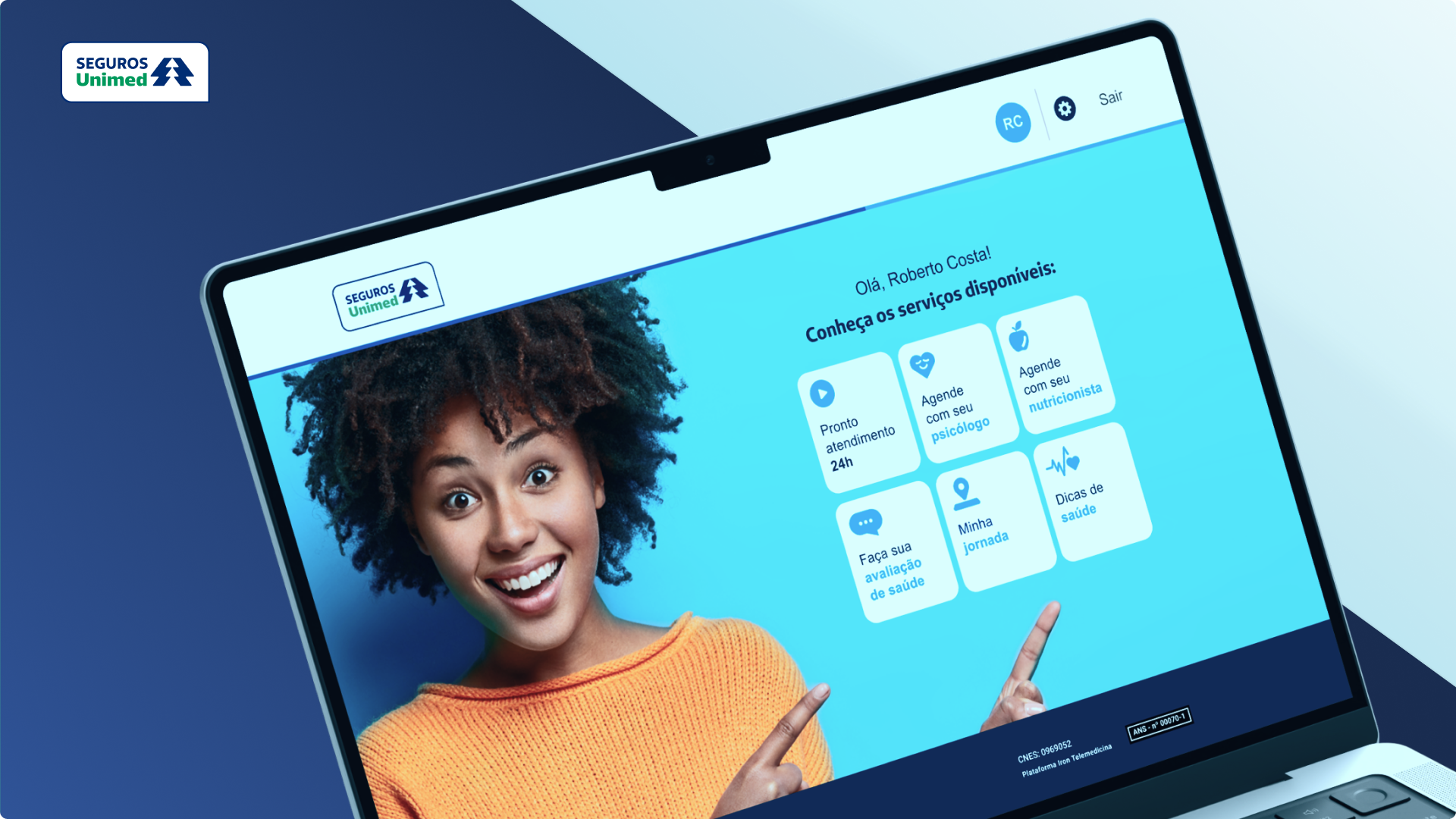
With Karla Granadeiro, I designed the Unimed Seguros telemedicine experience for beneficiaries who needed a consultation they could trust.
Overview
40,000 people needed remote care to actually hold.
Unimed Seguros is part of Brazil’s largest health cooperative. During the pandemic, remote care was necessary, and the apps on the market were generic: fragmented scheduling, and little of the institutional reassurance this audience needed.
A significant share of beneficiaries were 60 or older. Unimed had flagged that before we started. It shaped how much clarity the product had to carry.
Problem
The barrier was trust, not a missing feature.
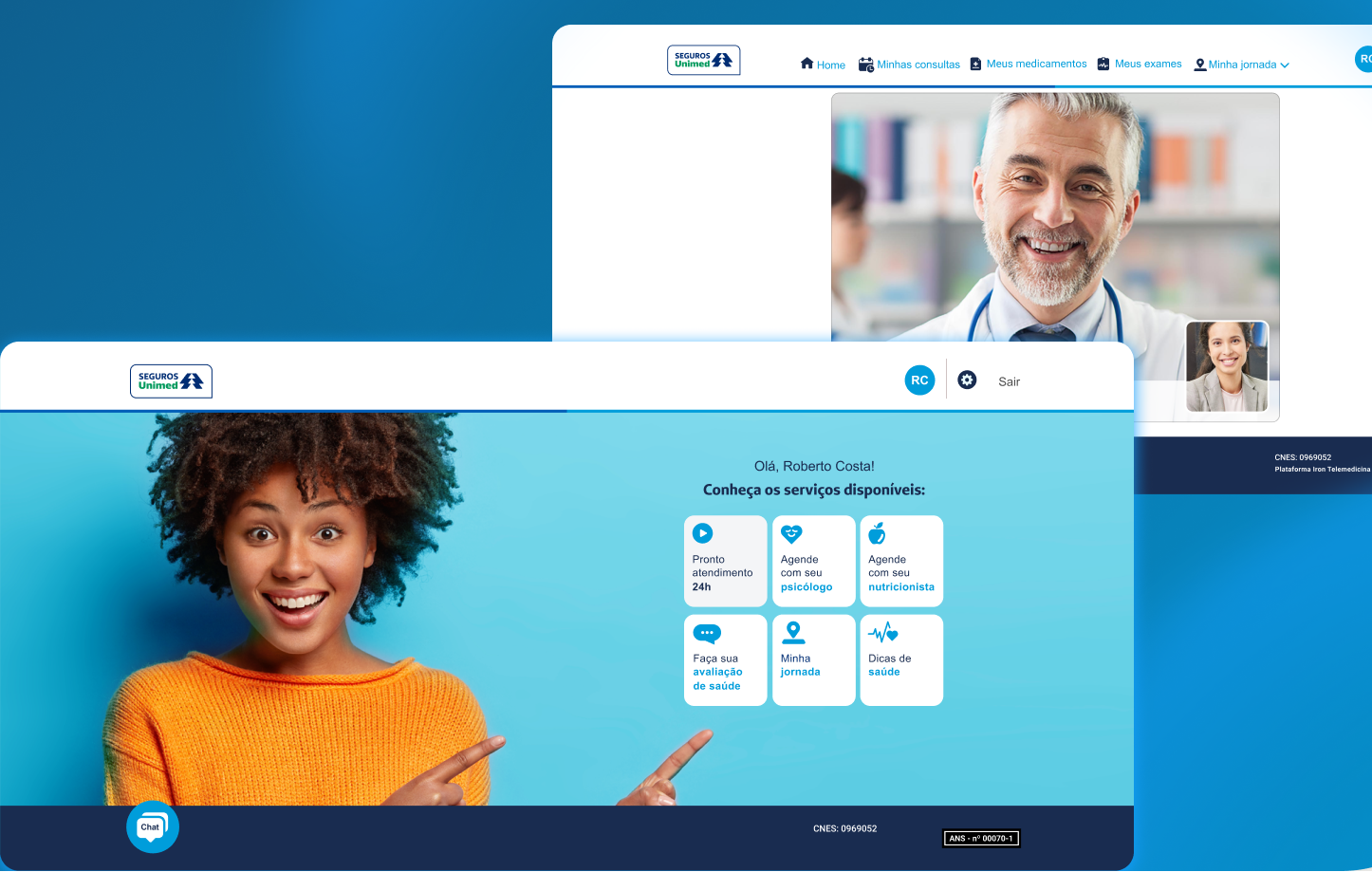
Beneficiaries needed to believe a remote consultation would work when they needed it. A flow that raises doubt sends someone back to in-person care, which is exactly what the product was meant to avoid.
Opportunity
The company already knew its patients. The job was to refine that for Unimed.
This was an established healthtech, not a blank slate. Personas already existed from interviews over time. When Unimed contracted the bundle, we refined that study for their audience instead of starting research from zero.
There was no benchmark against other health apps. The company was the reference. The goal, in the middle of the pandemic, was to get a patient through a consultation as fast as possible. The emotional context was chaos and an urgent search for help.
Solution
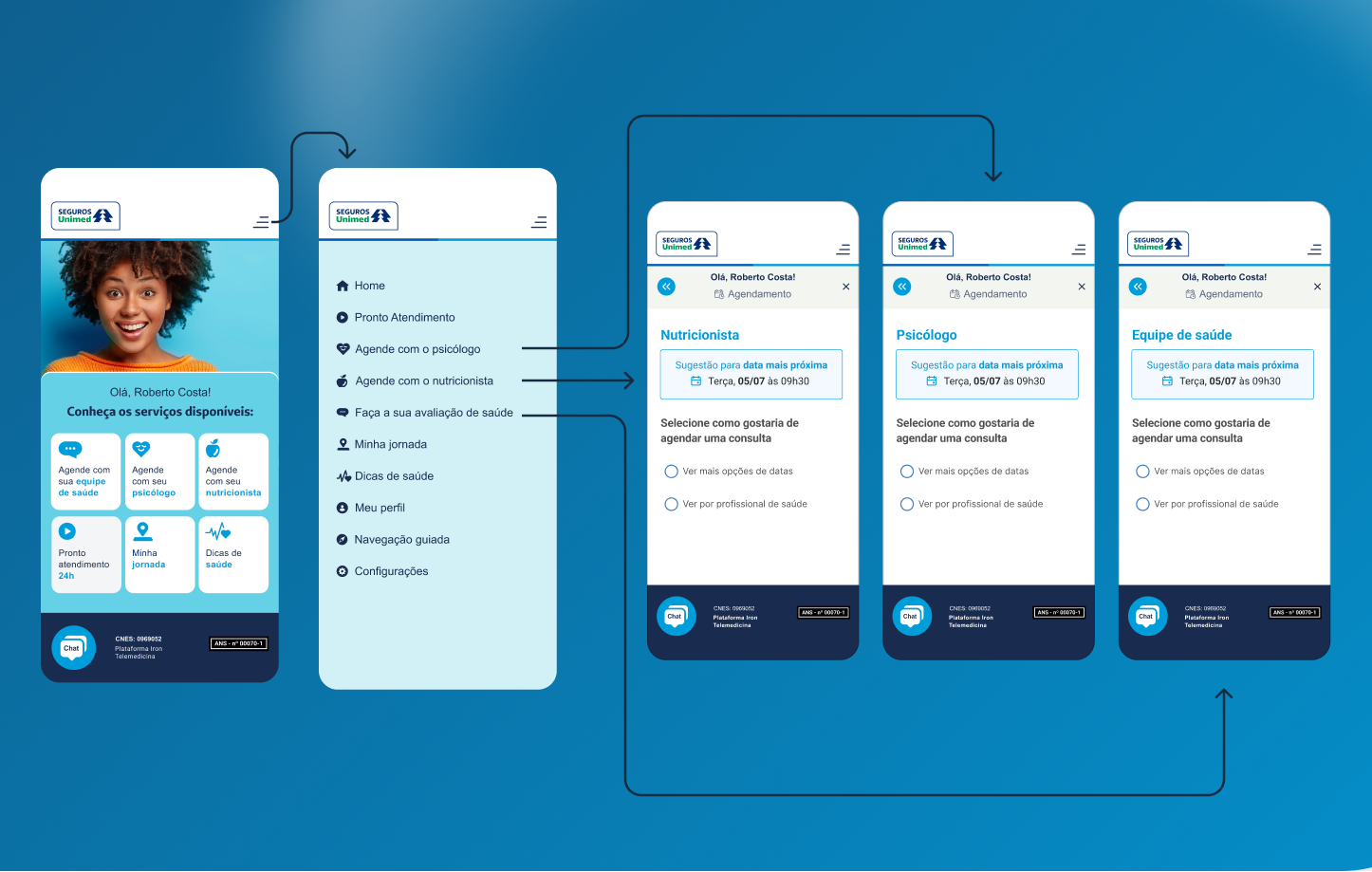
One next step, on every screen.
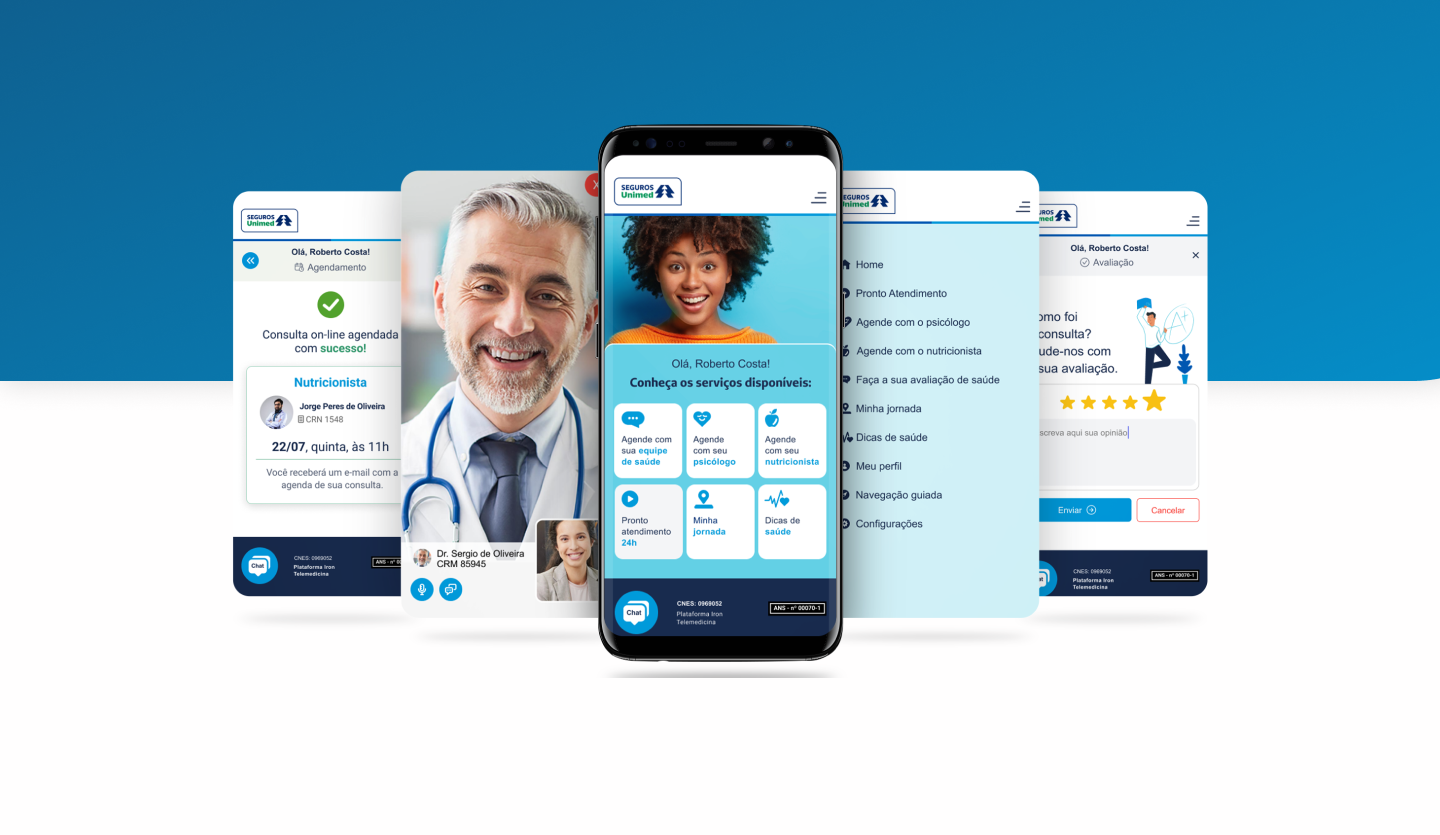
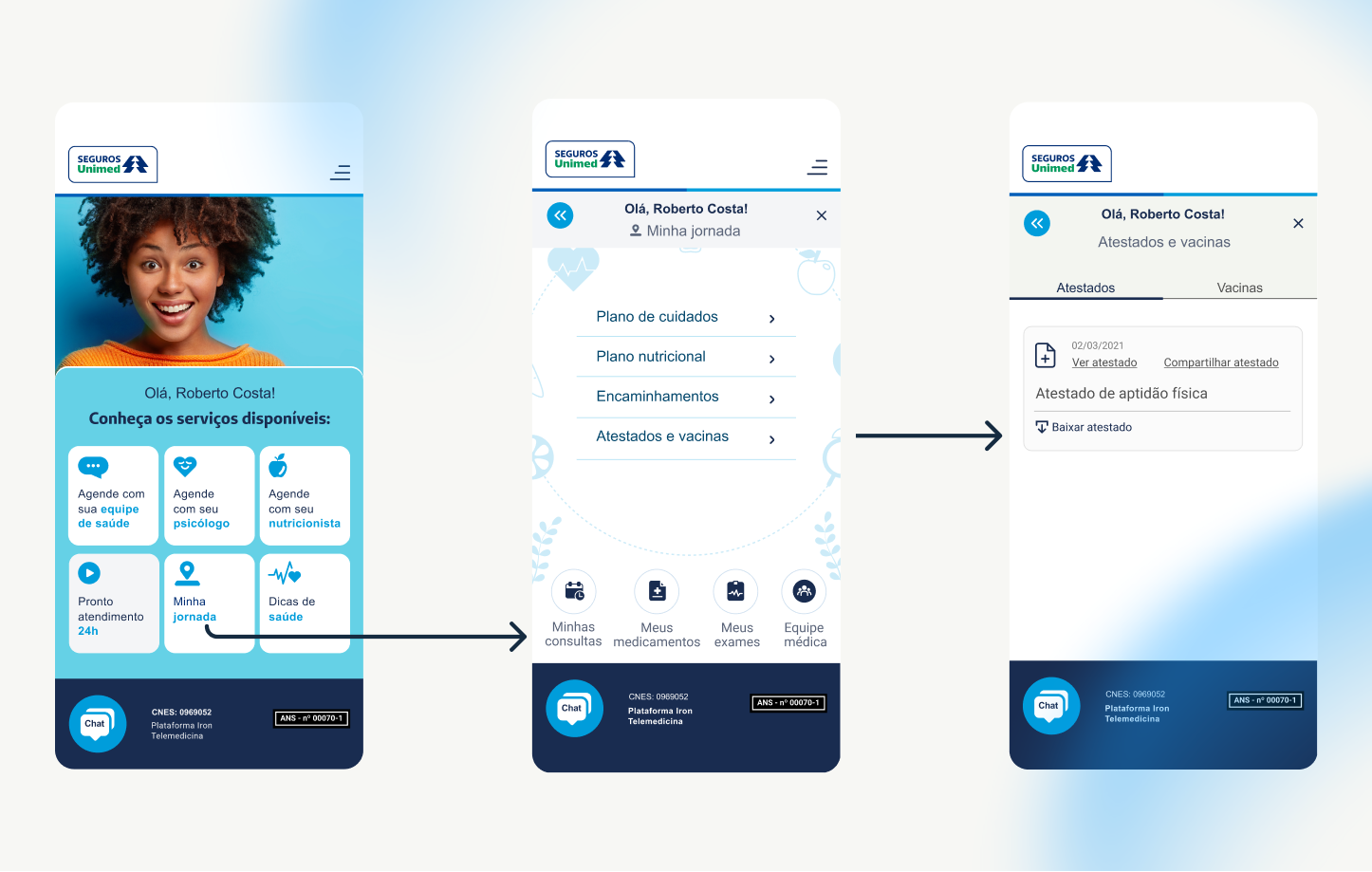
The app sits on four pillars, held by three principles: a clear next step instead of a menu of options, institutional trust through visual restraint, and predictable guidance through the whole flow.
Core experience
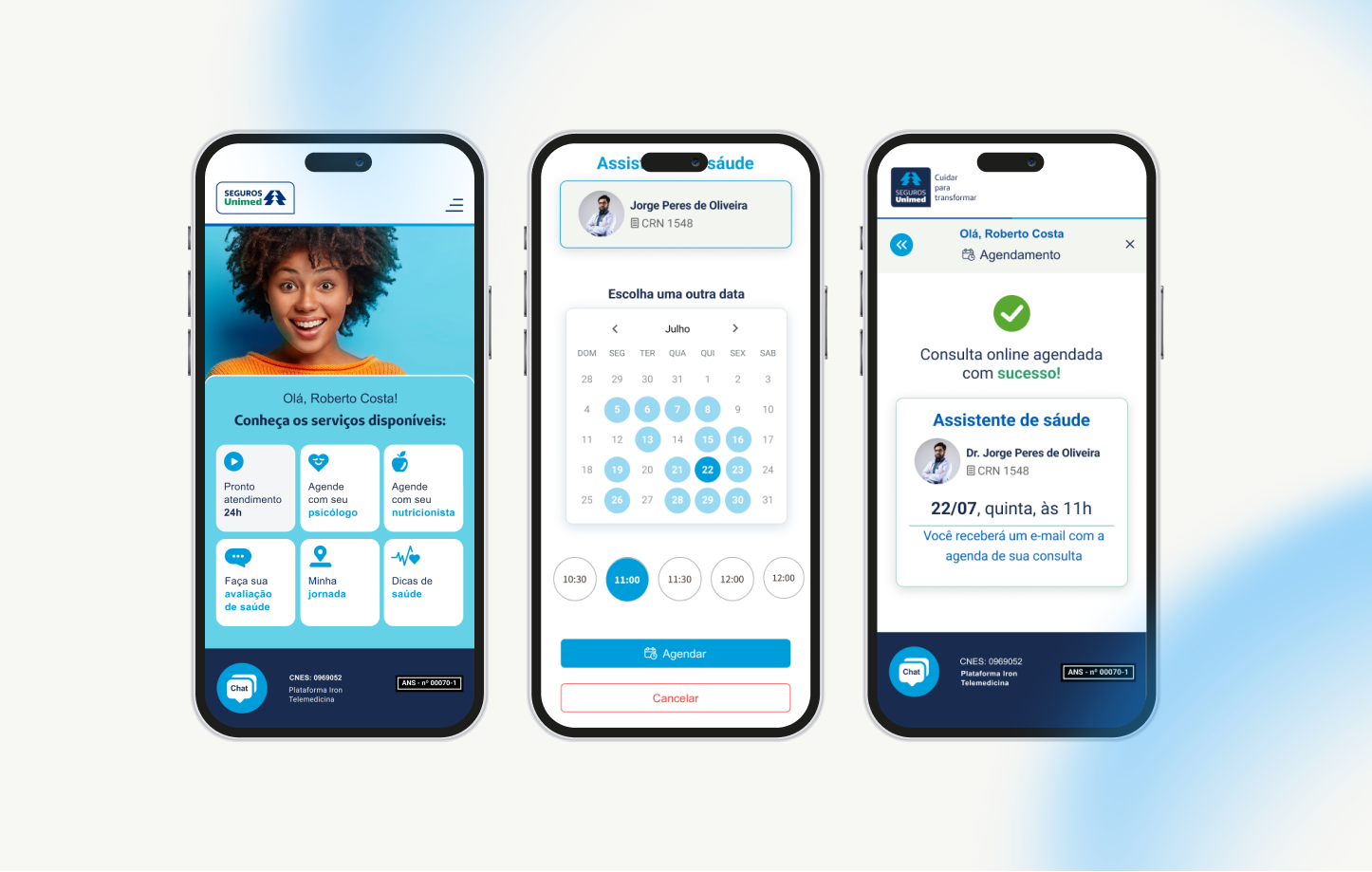
The consultation is the product. Everything else keeps people in it.
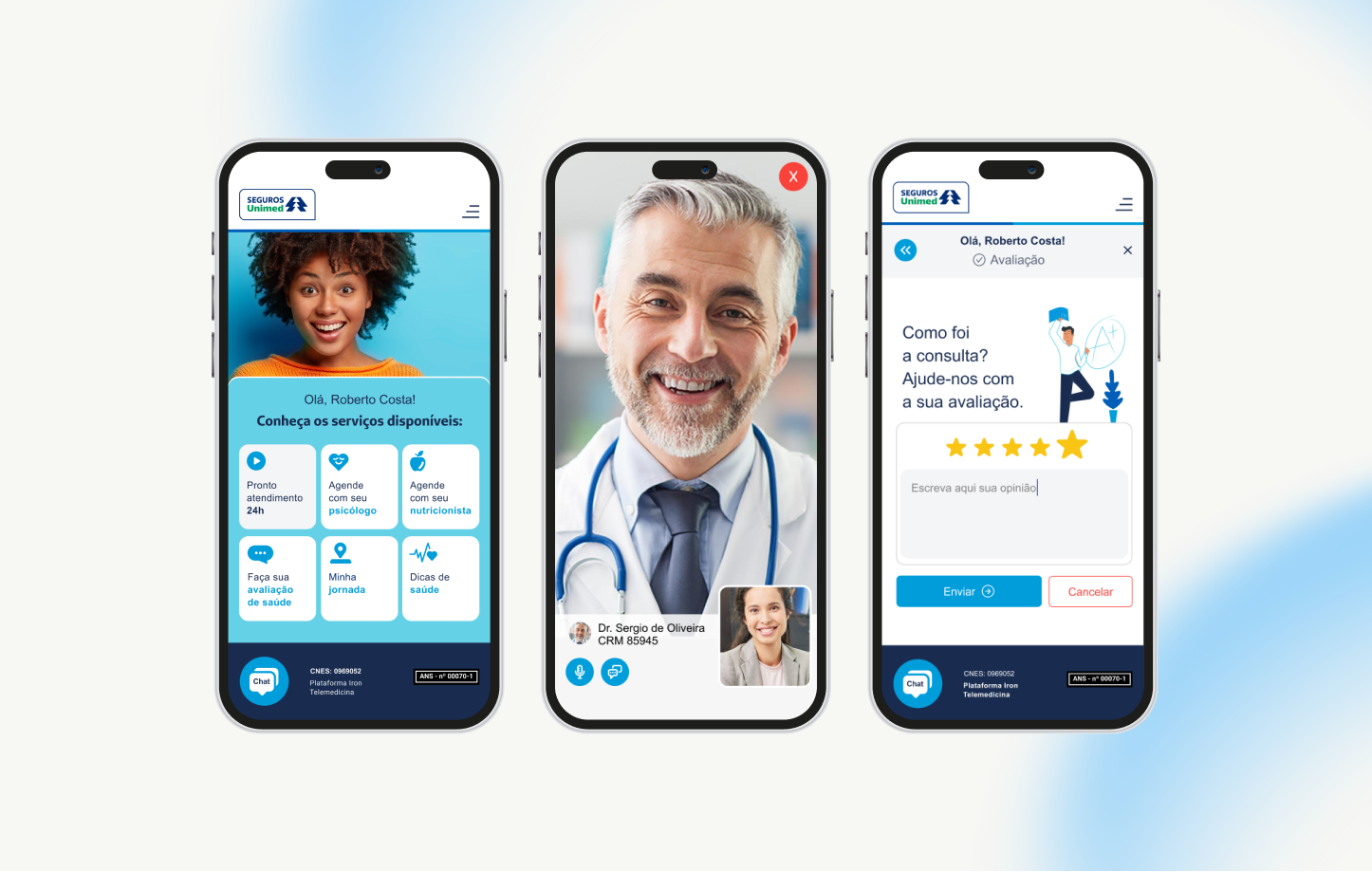
The visit itself.
Video and chat with a professional, which is the moment trust matters most. Referrals, when needed, happen during the consultation. There is no extra redirect.
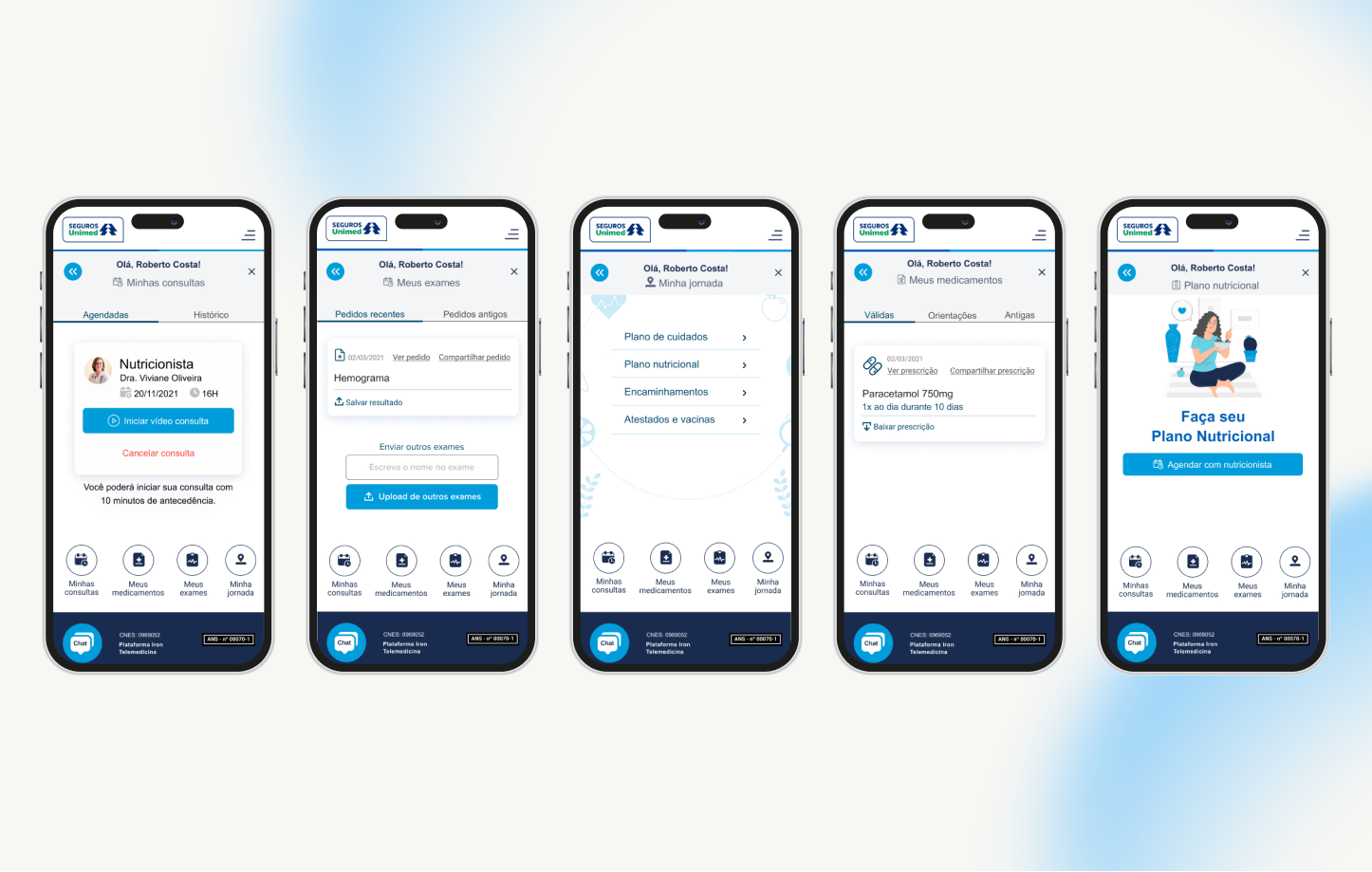
History, so follow-up is not a search.
Past consultations, recommendations, and guidance live together.
Prescriptions, certificates, and medicines.
When almost nobody could leave home, the app became the way to reach medical orders and other assistance, through one guided path.
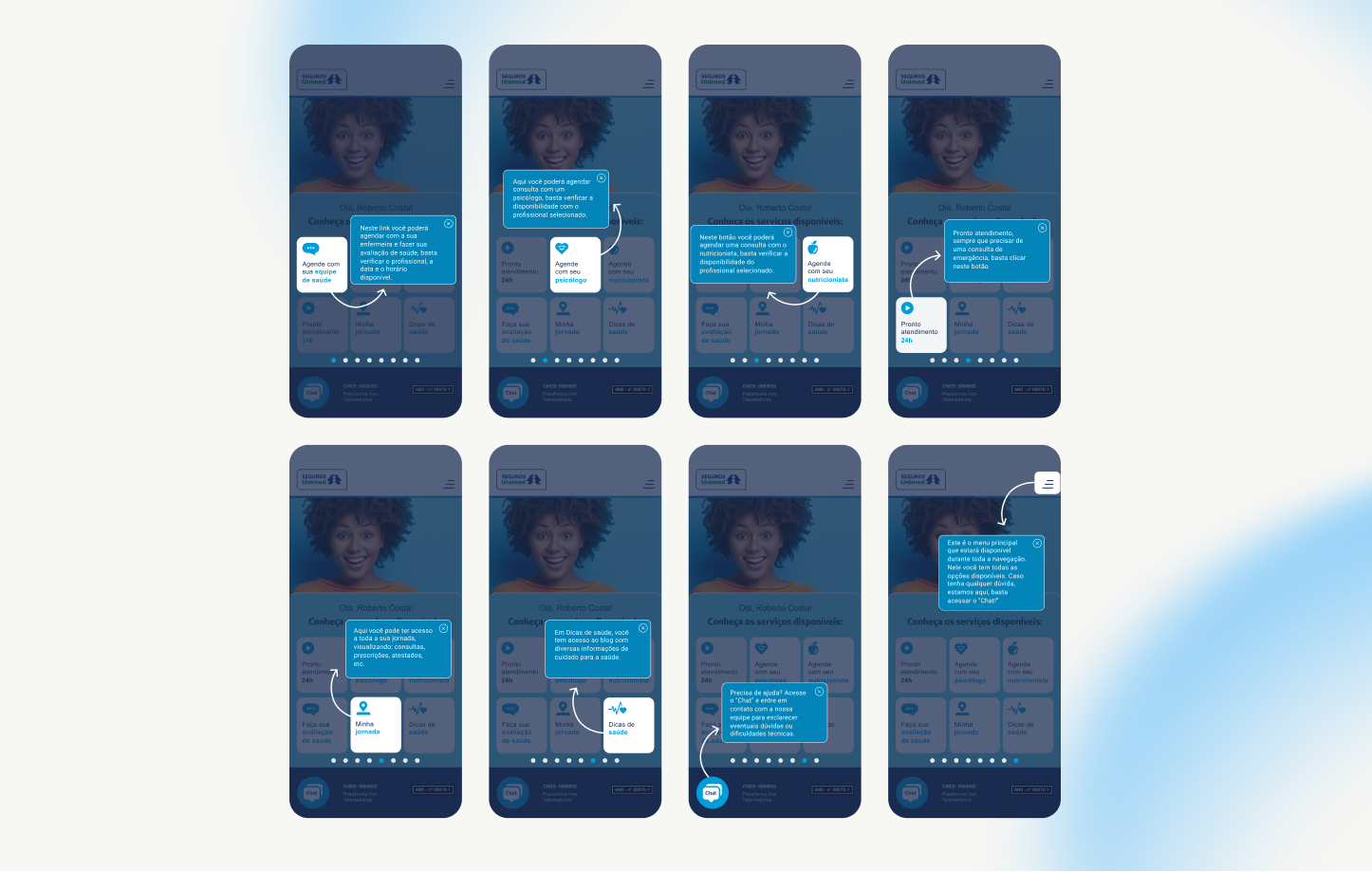
Onboarding and a human on the other side.
Because so many beneficiaries were 60 or older, interface was only half of it. A full onboarding was built for Unimed and stayed available on the platform, not only on first open. A 24/7 in-app chat covered doubts in the flow.
Decisions
We extended a product that had already been proven, instead of rebuilding it.
Validation for the core did not come from a formal usability test with Unimed. The product had already been through a previous client, so the flow, architecture, and language were already in production.
The Unimed-specific work was new services on that base, including the dedicated onboarding. Karla Granadeiro and I shared the research, flows, and design system.
Results
Scale, during lockdown, with the numbers the operation reported.
The 24/7 chat retained over 80% of people who arrived with a doubt, resolving it in the product instead of losing them mid-flow. Referrals stayed inside the consultation.
These are operational outcomes from production, not a controlled usability study run with Unimed beneficiaries.
Reflection
For a first telemedicine visit, the interface is only half the product.
Onboarding, chat, and aligned human support are what make remote care feel like it will work when someone needs it. Every ambiguous step adds stress. Every clear next step keeps the person in the flow.
What I would still want: real-time appointment status, and records that stay connected across consultations, so trust lasts past the first visit.