
Petrobras Saúde · Telemedicine
A workforce that could not wait for the clinic.
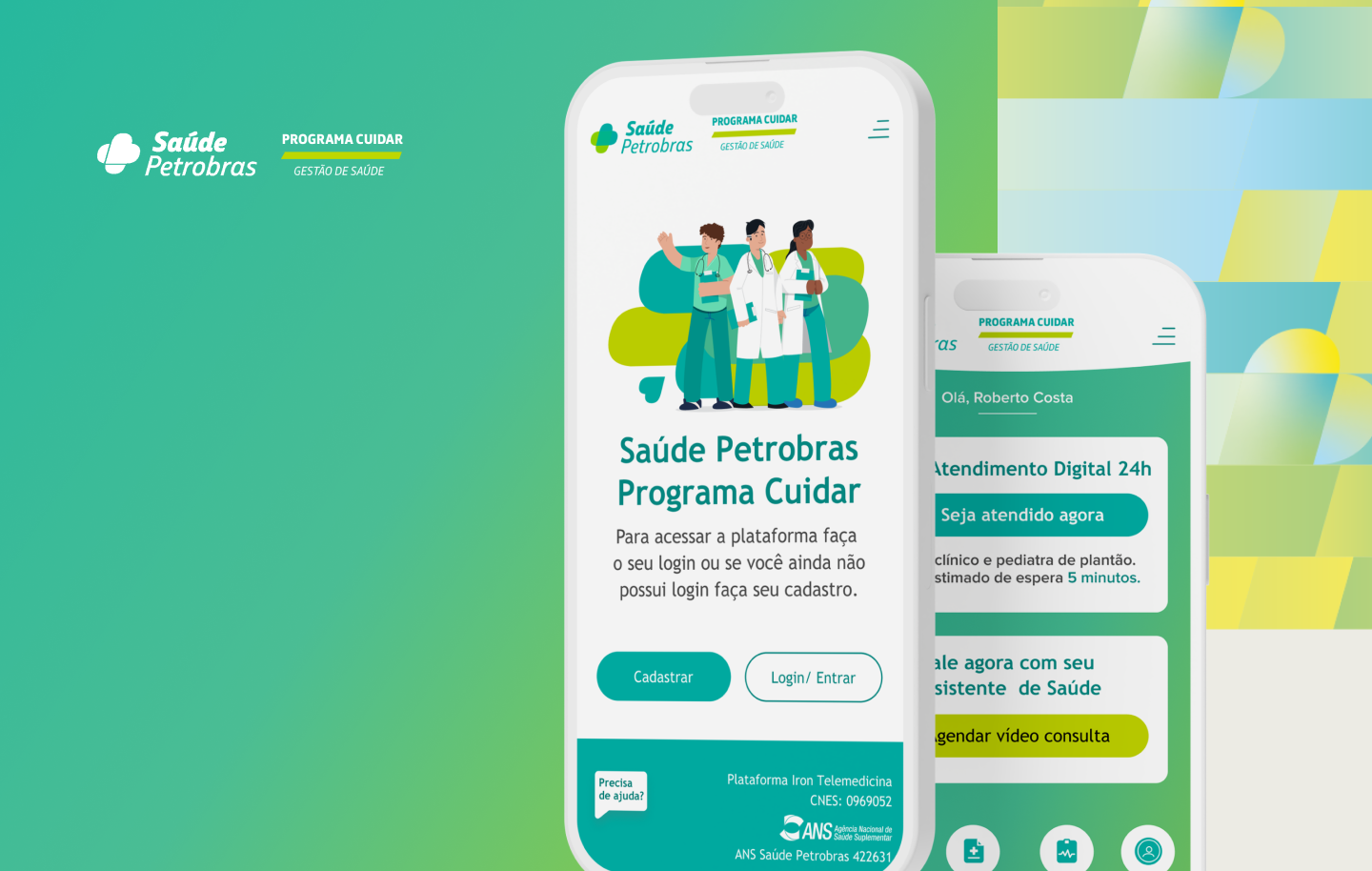
With Karla Granadeiro, I designed a triage-first path so employees could describe a symptom, get guidance, and reach a doctor without a clinic visit.
Overview
Describe, triage, consult, then guidance.
Petrobras Saúde is one of Brazil’s largest corporate health plans. During COVID, 50,000+ employees and families needed symptom evaluation and a doctor without a clinic visit.
The corporate portal scattered that path across disconnected screens. Many of these people were using telehealth for the first time, and they were anxious.
Problem
A complete menu failed the moment people were worried.
A home screen full of health services looked finished in stakeholder reviews. In use, people skipped dense medical screens and stalled on the choice of where to start.
Opportunity
Lead with the symptom, not the service catalog.
Employee interviews, flow mapping, and prototype testing happened before the full build. The research kept returning the same need: plain language, quick access, a clear next step.
Solution
One decision at a time.
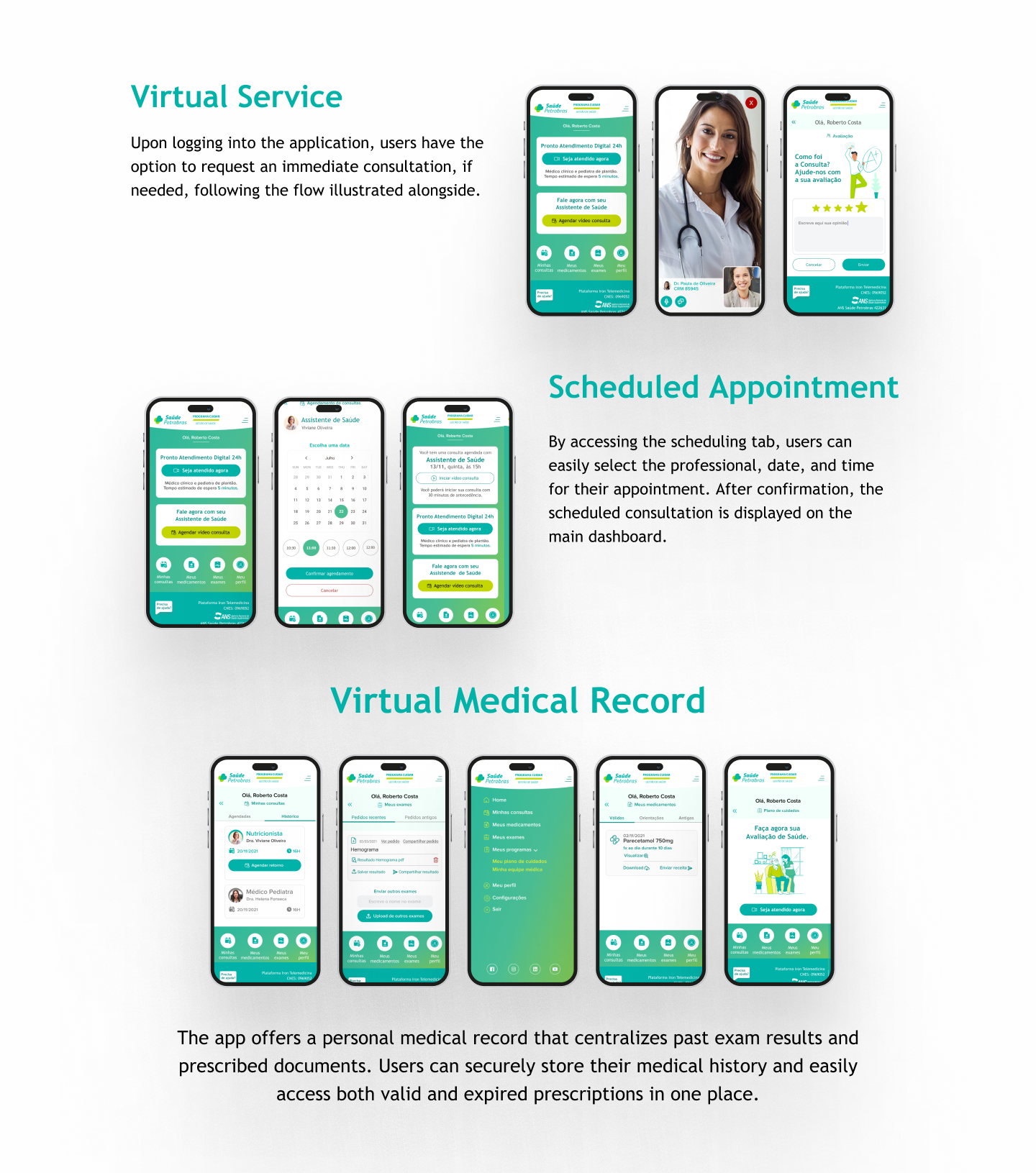
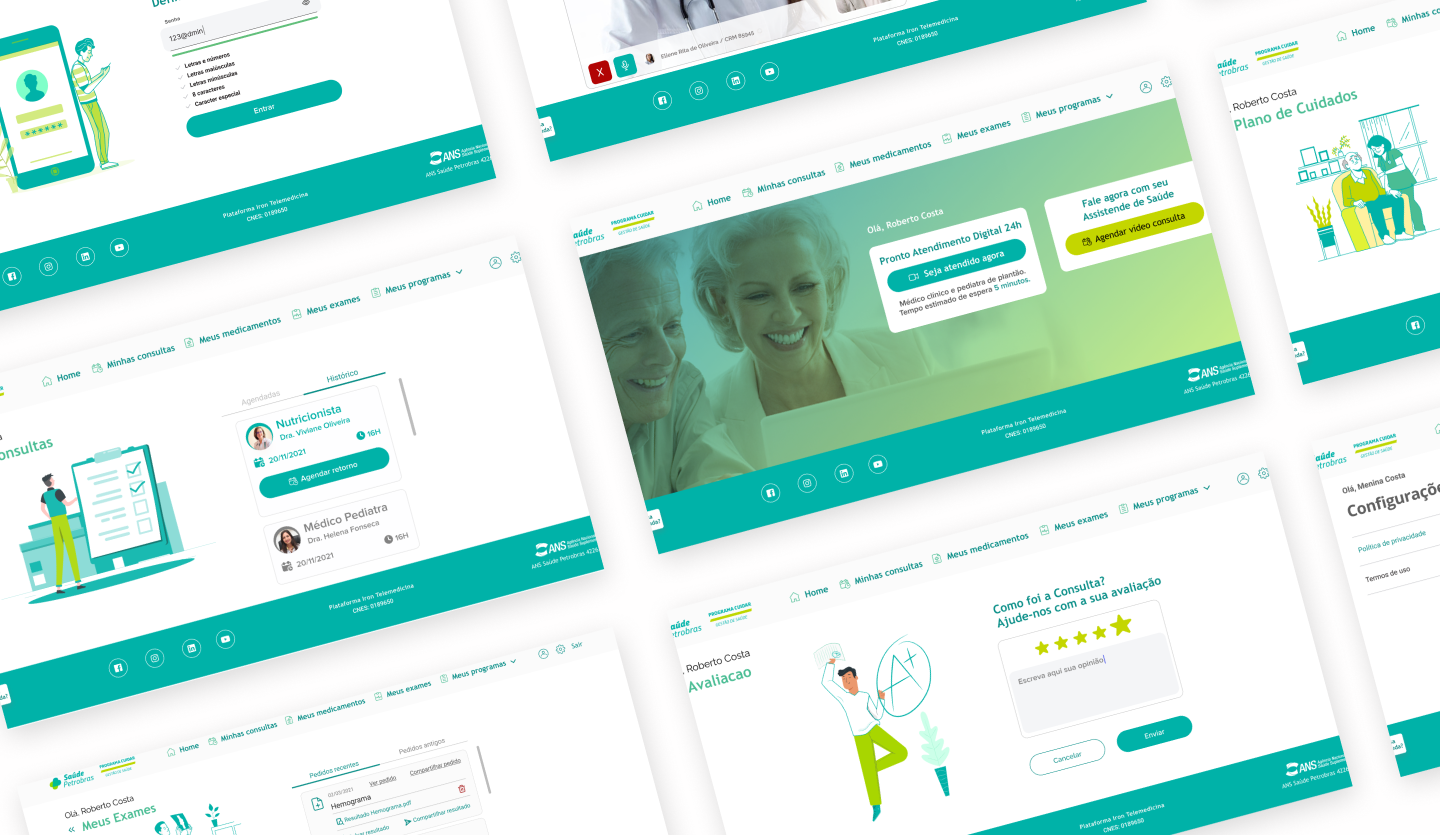
The path is modular and step by step, especially in a moment of health concern. Scope covered triage, the interface, and a visual system aligned with Petrobras.

Decisions
Three trade-offs for a crisis.
Everyday language over a clinical dashboard.
Information-heavy screens were tested early. People skipped them. Progressive disclosure replaced the jargon.
Triage before the feature menu.
We led with symptom evaluation because that was the entry employees actually needed.
The institution’s trust, with a human tone.
Petrobras alignment without bureaucratic coldness: calm visuals, confirmation states, and a cue that the session was secure at every handoff.
Results
What we could observe. Not a published benchmark.
The product shipped at the COVID peak for 50,000+ beneficiaries. Employees reached medical support without a clinic visit, which eased in-person load when capacity mattered.
Usability testing highlighted ease of navigation for first-time telehealth users. Digital triage routed non-critical cases away from in-person services. I do not have published completion rates or time-on-task for this project, so I am not stating them.
Reflection
Every extra decision point costs more when someone is already afraid.
Crisis products do not get to show the whole system at once. The judgment was what to withhold until the person had described what was wrong.
What I would still build: preventative care at the same entry, and health tracking that remembers the last consultation.